Skip to content

Hard Drive Data Recovery

Hard drive recovery at Datraction costs from £150 for logical faults and £450–850+ where the drive has failed mechanically. Standard turnaround is 5–10 working days, or 24 hours on the emergency tier. Standard diagnostics are free, and no recovery fee is due if we cannot recover useful data.

Start a free diagnosis
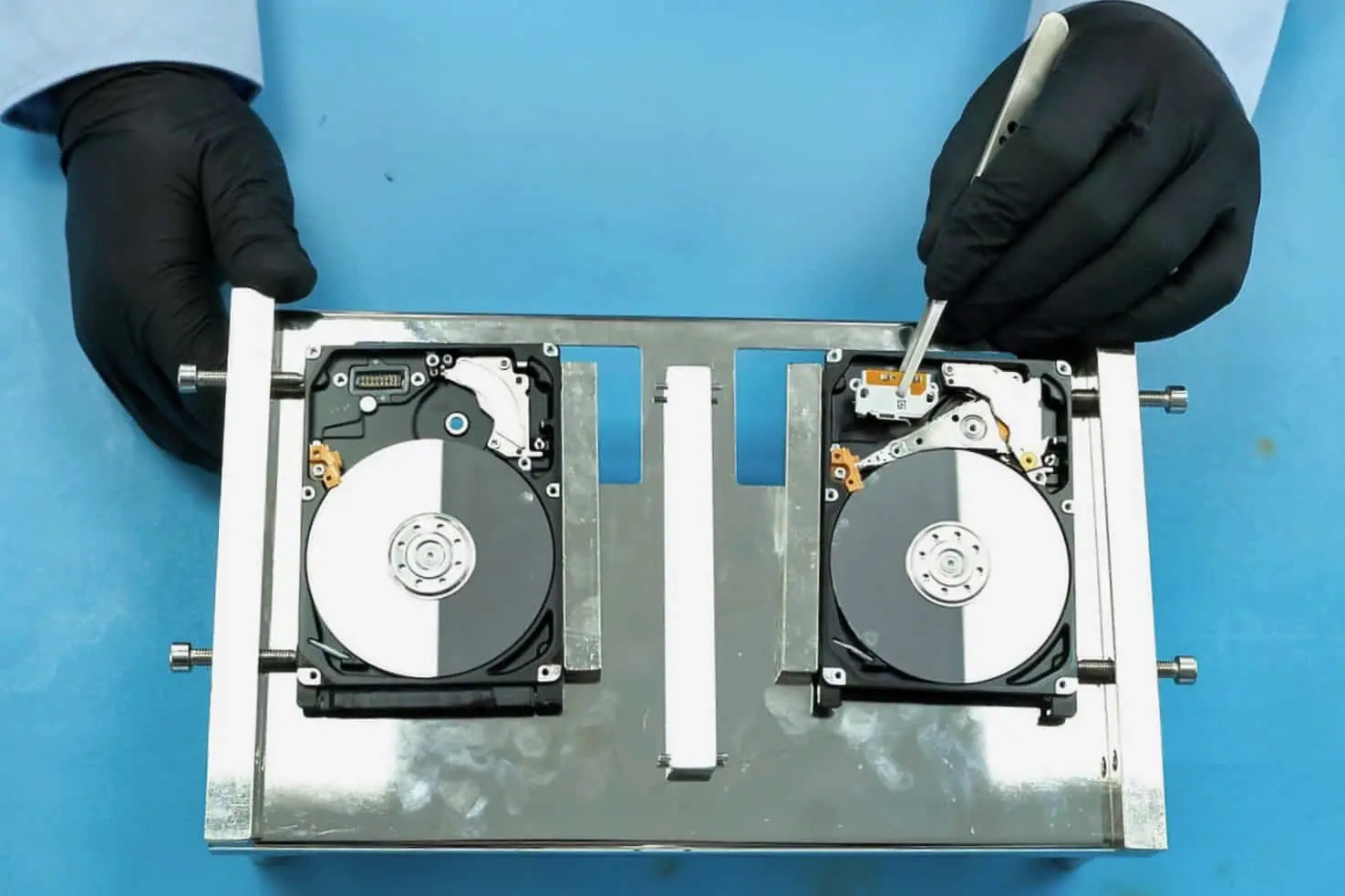
A technician working on two open 2.5-inch hard drives secured in a precision head-swap jig
  • Freestandard diagnosis
  • No useful datano recovery fee
  • Londonin-house laboratory
  • 24 hoursEmergency target

What is the drive doing?

Choose the closest match. The symptom changes both what you should do now and how the drive should be assessed.

  1. Clicking or grinding

    The drive repeats a click, scrape or spin-up cycle.

    Do this now
    Stop powering it on and do not run a scan.
    Likely lab route
    Mechanical assessment, donor matching and controlled imaging where viable.
  2. Not detected or disconnecting

    The drive vanishes, freezes a computer or drops during copying.

    Do this now
    Disconnect it and avoid repeated cable or enclosure tests.
    Likely lab route
    Power, electronics, firmware and surface stability are separated before imaging.
  3. Deleted, formatted or corrupted

    The drive remains readable but files, folders or a partition are missing.

    Do this now
    Stop writing to it and do not initialise or repair the volume.
    Likely lab route
    A sector image is acquired first, then file-system reconstruction is carried out on the copy.

A hard drive is a chain of dependencies

A readable platter is not enough. The heads, pre-amplifier, firmware and recording surface must work together long enough to acquire stable sectors.

  1. Recording surface
  2. Head assembly
  3. Pre-amplifier
  4. Firmware
  5. Sector image

Recovery work aims to acquire the data, not return the failed drive to everyday use.

What the diagnosis can establish

Diagnosis is useful when it narrows the route and the limits. We state both before you approve recovery work.

What may be possible

  • Stable or targeted imaging through the native interface.
  • Firmware work where the exact family and fault are supported.
  • Donor-assisted mechanical work where the platters remain viable.

What can stop recovery

  • Severe platter scoring or contamination can destroy recorded areas.
  • An incorrect previous head swap can reduce the remaining options.
  • Overwritten sectors cannot be recreated from the drive.

How the drive is assessed

The symptom is only the starting point. These are the physical and logical dependencies that shape the recovery route.

  1. What a clicking drive actually means

    A drive that clicks is moving its heads and failing to find the servo data it expects. Every power cycle after that point risks turning a recoverable fault into an unrecoverable one, because damaged heads scrape the platter surface they are supposed to float above. The single most useful thing you can do is stop powering it on.

    Close detail of an opened hard drive showing the platter surface and read/write head
    Platter surface and head, magnified
  2. Why we keep a donor drive library

    Donor components must match more than a brand or capacity. Model family, revision, head map, preamplifier and other parameters can all affect compatibility. Our donor library spans Toshiba, Samsung, Western Digital, HGST, Hitachi and Seagate. Where internal work is justified, compatible parts are selected and the drive's original adaptive information is preserved before controlled imaging begins.

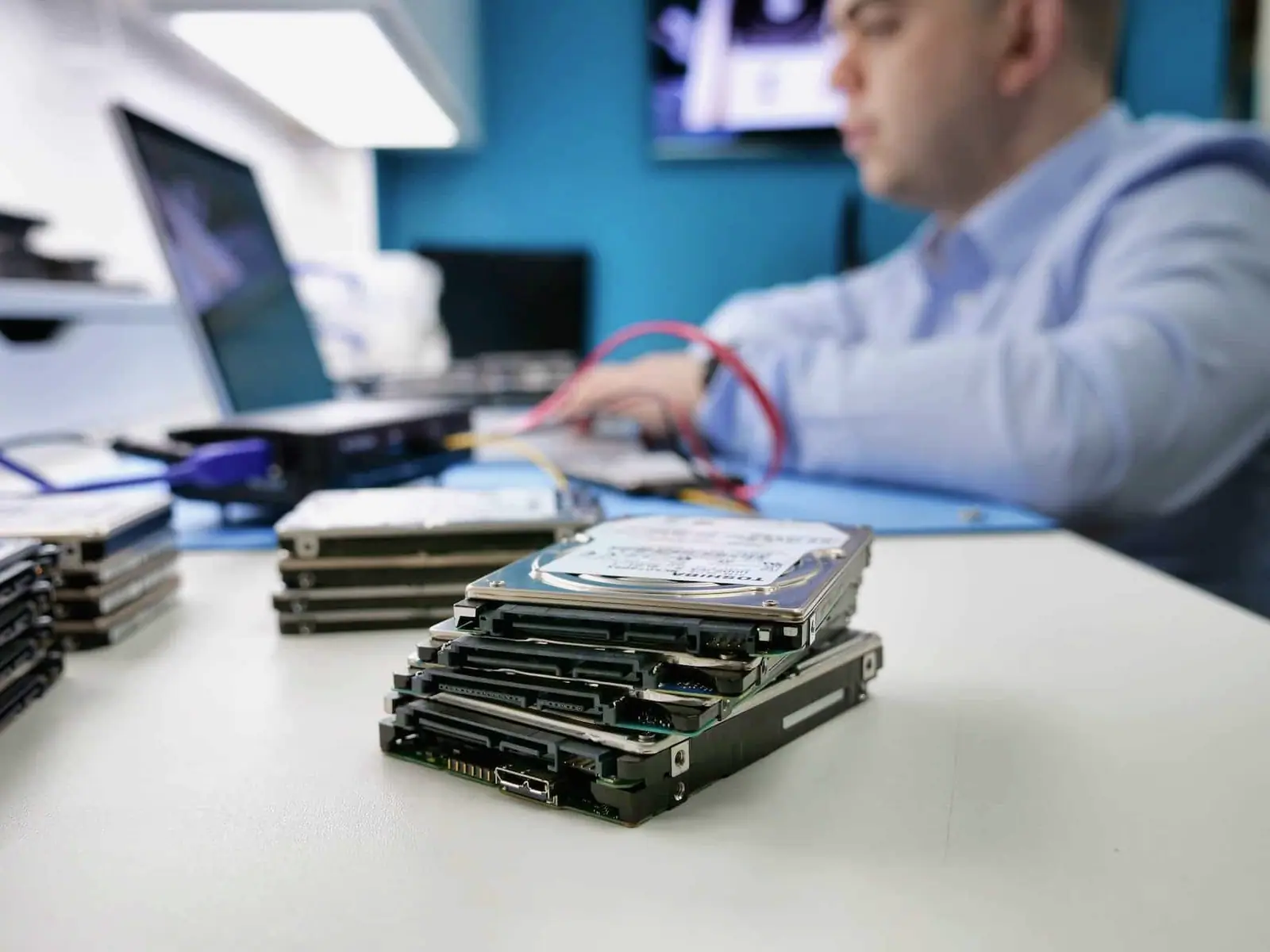
    A stack of hard drives on the bench, kept as donors for parts matching
    Donor library · Seagate, Western Digital, Toshiba, HGST, Samsung, Hitachi

Cases from the bench

Real cases show the fault, the decisions made and where the result stopped. They are evidence, not a promise that every device behaves the same way.

View all case files

Customer identities and ticket references have been removed. Images show Datraction laboratory methods and are not presented as photographs of the archived customer device.

What happens to your hard drive

From first description to returned files, each stage has a clear decision and an agreed commercial limit.

View the complete recovery process
  1. Your enquiry

    Tell us what happened

    Describe the device, the failure and the files you need. We give you an initial price range before it is sent or dropped off.

    Price range before arrival

  2. Lab diagnosis

    We inspect it — free

    An engineer identifies the fault, assesses complete and useful partial recovery, then prepares a written price or agreed range.

    Fault, prospects and commercial limit confirmed

  3. Your decision

    You approve the recovery

    We explain the proposed work and timing. Recovery starts only after you have accepted the quote.

    No work starts without consent

  4. Secure return

    Your files come back

    Recovered data is copied to suitable return media and sent back with your original device.

    No recovered data, no recovery fee

Recovery priority

How fast do you need your data back?

The engineering process and level of care stay the same. A faster service moves your case forward in the lab queue.

Turnaround starts when the device reaches our laboratory.

  1. 01

    Standard

    5–10 working days

    Targets recovery and return within 5–10 working days of the device reaching our lab, subject to diagnosis, parts and media condition.

    Recovery price Included
  2. 02

    Express

    3–5 working days

    Prioritises the case and targets 3–5 working days from arrival, subject to diagnosis, parts, media condition and data volume.

    Priority surcharge +40%
  3. 03

    Emergency

    24 hours

    Gives the case highest queue priority and targets 24 hours from arrival when the fault, parts, media condition and data volume allow it.

    Priority surcharge +70%

Questions about hard drive

01 I have an emergency and I need data recovering from my hard drive right away. Can you help?

Emergency recovery targets 24 hours from the drive reaching our lab and adds 70% to the quoted recovery price. This is a priority target, not a guarantee that severe mechanical damage or a required donor part can be made predictable. Tell us which files matter first when booking.

02 I have a very old hard drive. Will you be able to fix it?

We’ve recovered data from many different hard drives, some of which are much older models. Between us, our team has a lot of experience. So, it’s likely someone on our team will have seen your hard drive before and know how to tackle it.

03 Can you recover data from all corrupted or damaged hard drives?

No. Overwritten sectors, severe platter damage, missing encryption keys or damage caused by previous opening can prevent a complete recovery. Diagnosis establishes whether a complete or useful partial result remains possible, and we ask which files matter most before recovery work begins.

04 How much does hard drive data recovery cost?

The cost will vary depending on how much work is required to retrieve your data and how soon you want it. For example, if you require your data back urgently, this will increase the cost. When you get in touch with us, we will provide you with a full quote for carrying out the work and we won’t start until you’re happy to approve the quoted cost.

Tell us what happened

Describe the device, the symptom, what has already been tried and which files matter most. We will tell you the safest next step.

Prefer to speak to someone? 020 8543 7088

Already asked to send the device? Follow the packing and delivery checklist.

Standard diagnosis is free. We normally reply within one working day.

Do not enter a device passcode, password or recovery key in this form.

  1. 1 Device
  2. 2 Problem
  3. 3 Speed
  4. 4 Contact
What do you want to recover data from?