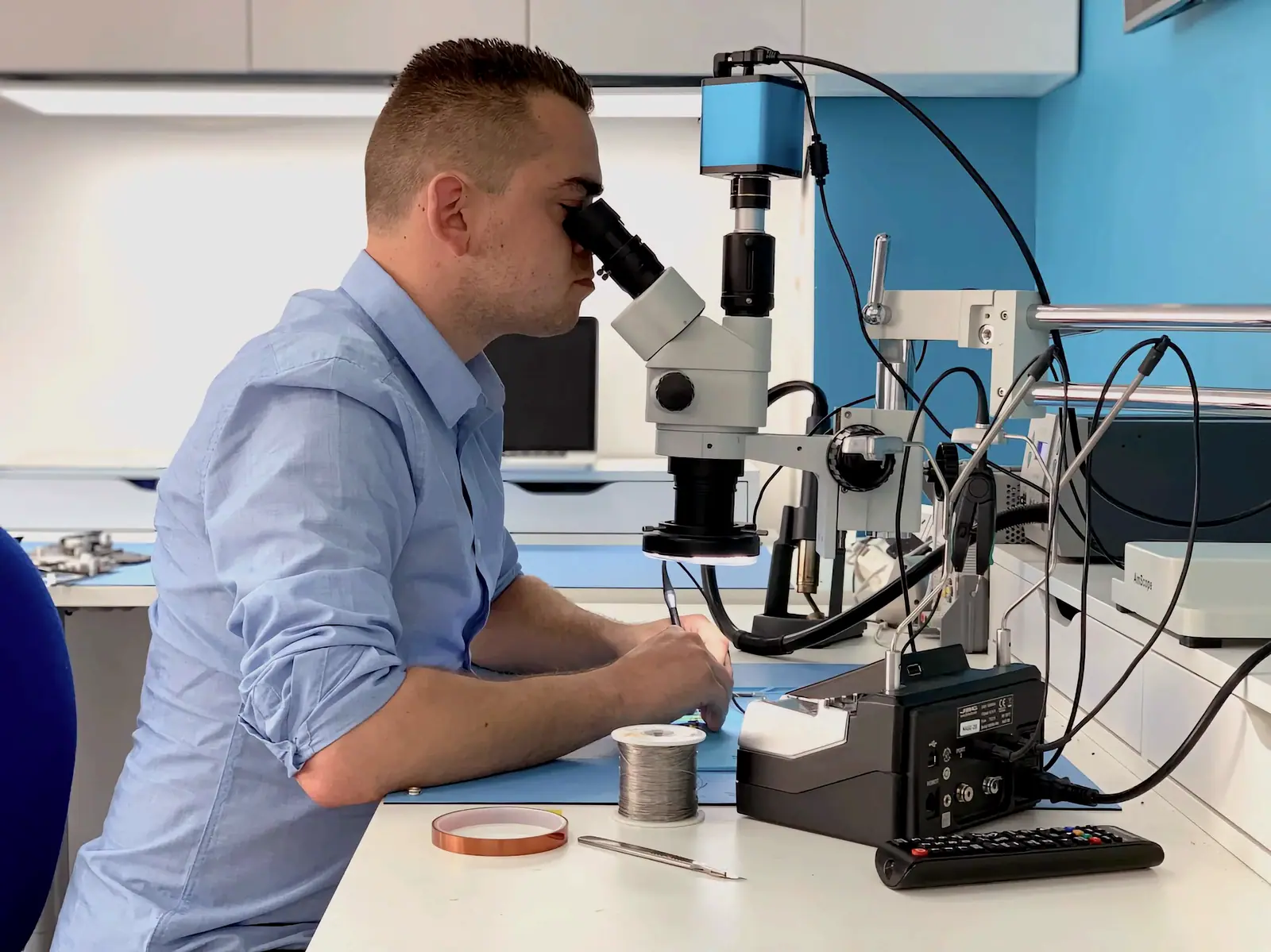
Data recovered after rebuilding a flash drive’s USB connection
The connection was rebuilt, access was restored and the customer’s data was copied successfully to replacement flash storage.
- recorded turnaround
- 2 days
- recorded outcome
- Complete
USB flash recovery starts at £100 for logical faults, rising to £150–700+ for connector, controller, chip-off or monolith work. Standard turnaround is 5–10 working days, or 24 hours on the emergency tier. Standard diagnostics are free, and no recovery fee is due if we cannot recover useful data.
Start a free diagnosis
A snapped connector can leave the memory intact. Controller and NAND faults require a different route and are not solved by replacing the plug.
The plug moves, is missing or was pulled sideways.
The connector is intact but the drive never enumerates.
The drive appears but files are missing or copying fails.
USB power and data reach a controller, which translates NAND pages into the files the computer sees. Damage at each stage produces a different symptom.
A successful connector repair is an acquisition route, not a reason to trust the old drive again.
Diagnosis is useful when it narrows the route and the limits. We state both before you approve recovery work.
Flash storage hides its internal organisation. Controller behaviour, translation and the state of the memory decide what can be acquired.
A USB connector takes every knock the drive receives, whether that is being dropped, sat on or wrenched sideways out of a laptop port. The solder joints holding it to the internal board are the first thing to crack under that kind of stress, and once they do, the drive stops being detected at all even though the flash memory chip on the other side of the board is undamaged.
The board is inspected under a microscope to confirm where the connection has broken, then a new connector or direct wire leads are soldered on so the memory chip can be powered and read. Only once the chip responds reliably does imaging begin, so the fragile connection is never relied on for more than the time it takes to pull a full image.
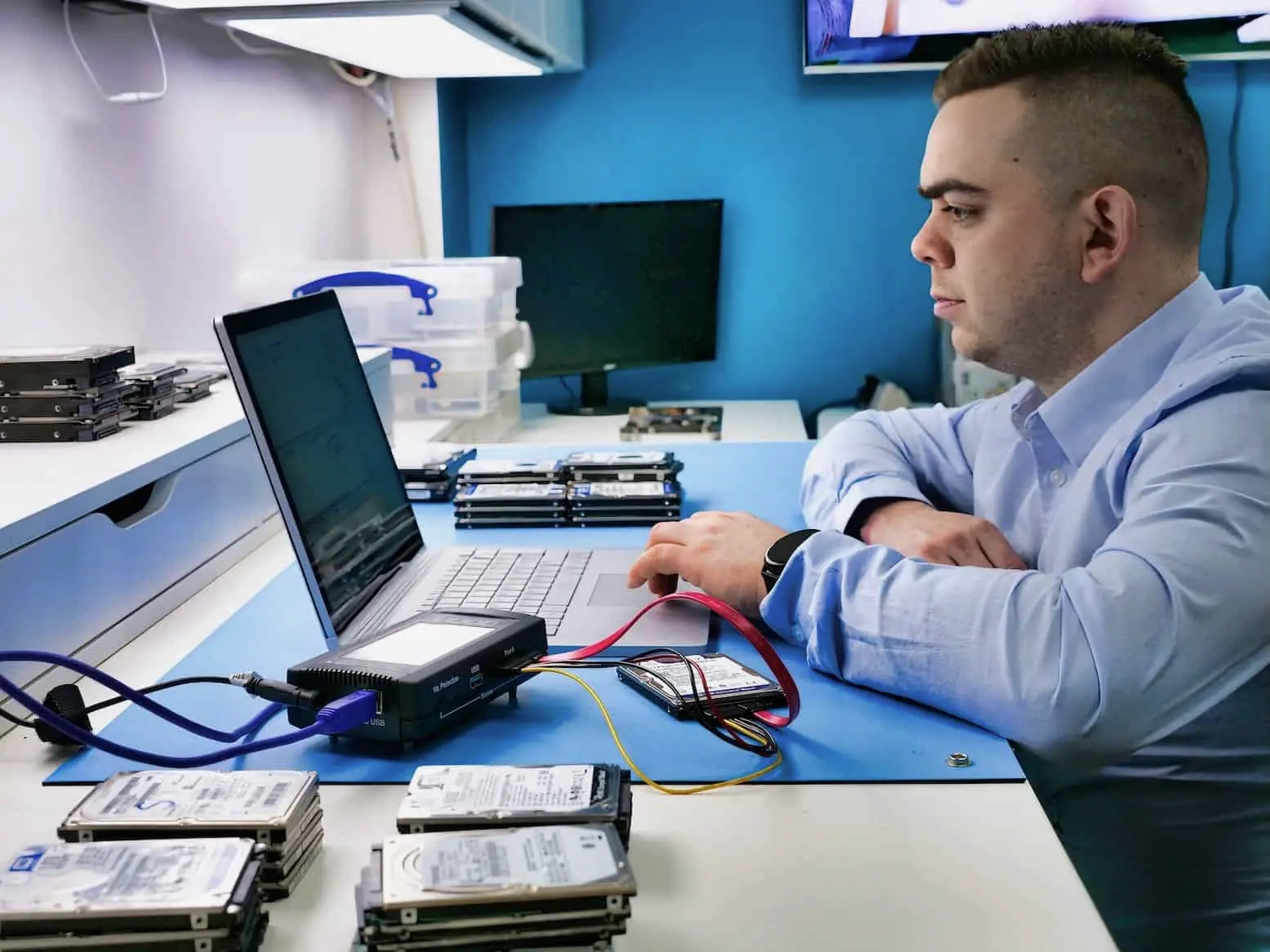
Real cases show the fault, the decisions made and where the result stopped. They are evidence, not a promise that every device behaves the same way.
The connection was rebuilt, access was restored and the customer’s data was copied successfully to replacement flash storage.
Customer identities and ticket references have been removed. Images show Datraction laboratory methods and are not presented as photographs of the archived customer device.
From first description to returned files, each stage has a clear decision and an agreed commercial limit.
View the complete recovery processYour enquiry
Describe the device, the failure and the files you need. We give you an initial price range before it is sent or dropped off.
Price range before arrival
Lab diagnosis
An engineer identifies the fault, assesses complete and useful partial recovery, then prepares a written price or agreed range.
Fault, prospects and commercial limit confirmed
Your decision
We explain the proposed work and timing. Recovery starts only after you have accepted the quote.
No work starts without consent
Secure return
Recovered data is copied to suitable return media and sent back with your original device.
No recovered data, no recovery fee
Recovery priority
The engineering process and level of care stay the same. A faster service moves your case forward in the lab queue.
Turnaround starts when the device reaches our laboratory.
5–10 working days
Targets recovery and return within 5–10 working days of the device reaching our lab, subject to diagnosis, parts and media condition.
3–5 working days
Prioritises the case and targets 3–5 working days from arrival, subject to diagnosis, parts, media condition and data volume.
24 hours
Gives the case highest queue priority and targets 24 hours from arrival when the fault, parts, media condition and data volume allow it.
Yes. Express service targets 3–5 working days from arrival and adds 40% to the quoted recovery price; Emergency targets 24 hours and adds 70%. Both depend on diagnosis, parts and the condition of the flash memory, and the tier you choose is confirmed in the written price before recovery begins.
A hardware-encrypted security drive normally requires its valid password, key or authorised recovery route. We may be able to repair the connector, controller or memory path, but physical recovery does not remove encryption. Proof of ownership is required for service and does not create a technical bypass.
Possibly. Age is less important than NAND wear, controller support, corrosion and previous damage. Older drives can use simpler layouts, while heavily used flash may contain many unstable cells. We inspect the exact device before deciding whether connector repair, controller-level access or direct flash work is appropriate.
No. Cracked memory dies, unreadable monolithic packages, overwritten data and unsupported controller or encryption designs can prevent recovery. An individual result can only be assessed after diagnosis. No recovery fee is due if useful data cannot be recovered.
Standard diagnostics are free, so you find out what is wrong before approving recovery. Logical faults start at £100; connector, chip-off or monolith work usually runs from £150 to £700+, with unusual layouts quoted individually. Express service adds 40% and Emergency adds 70%. If we cannot recover useful data, there is no recovery fee.
Describe the device, the symptom, what has already been tried and which files matter most. We will tell you the safest next step.
Prefer to speak to someone? 020 3903 9920
Already asked to send the device? Follow the packing and delivery checklist.