What the customer needed
The source was a 1 TB Seagate hard drive with a mechanical fault. Once the heads could no longer read the platter surfaces reliably, a normal file copy was not a meaningful option. The priority became stabilising the mechanism and extracting whatever the damaged source could still provide.
What had failed
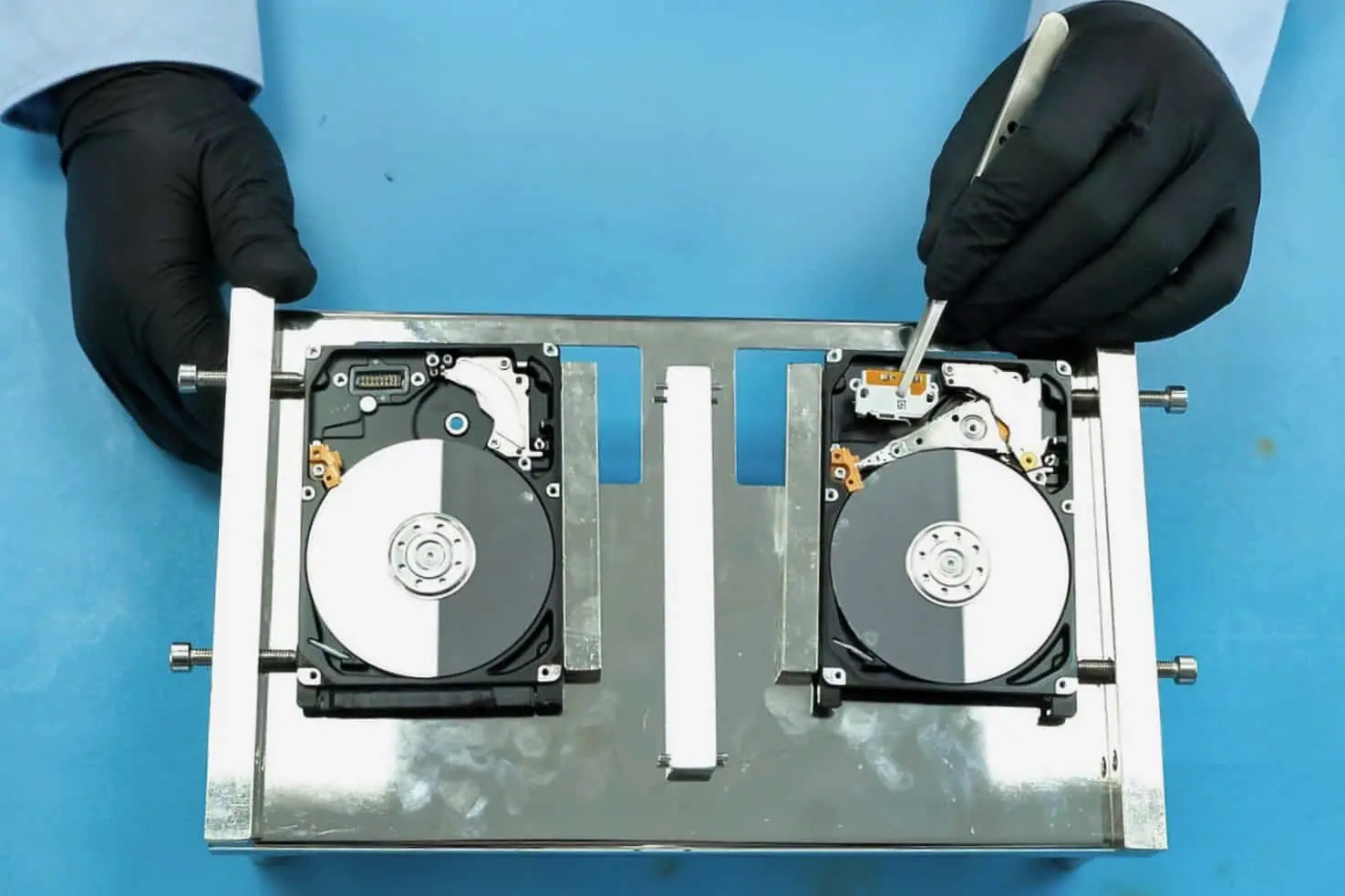
The job record identifies damaged heads. A head replacement is not a repair that makes the disk safe for continued use; it is a temporary recovery procedure intended to create a controlled reading window. Matching donor components were used during the attempts.
The process extended over roughly two months. That timescale reflects the reality of a difficult mechanical case: each intervention has to be assessed against the risk of worsening the source, and a new donor does not guarantee that damaged platter areas will become readable.
The recovery path
After donor-head work, the disk yielded approximately 130 GB. The recovered material then had to be judged as files, not just as a number of readable sectors. Some files were incomplete, so the result could not honestly be presented as a complete recovery.
The result
The outcome was a useful but partial recovery. The case demonstrates why Datraction asks which folders and file types matter most before complex work begins. When only part of a failing disk can be imaged, those priorities help direct the remaining safe reading time.
What this case teaches
A partial result is not a failed slogan or a complete success; it is its own outcome. Customers should be told what was recovered, what remains damaged and which files can be opened. A laboratory should never turn a raw gigabyte count into a claim that every important file survived.