Use tracking.
Use a tracked delivery service and keep the tracking number until the device has been logged by the lab.
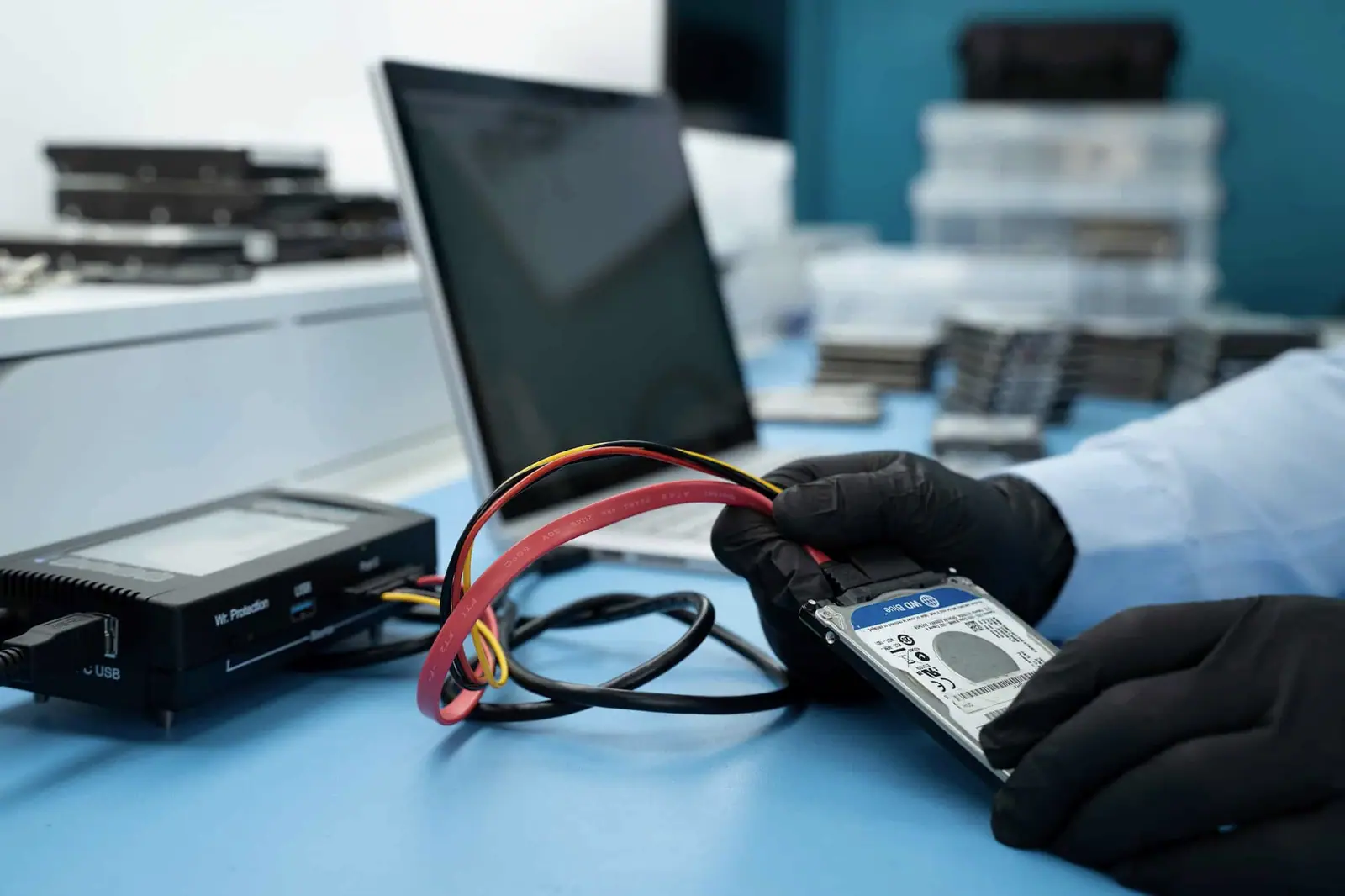
Every recovery follows the same commercial safeguards but not the same technical script. We log the device, understand which files matter, assess complete and partial recovery, agree the price or range, recover and verify the result, then return the data and delete our working copy.
Contact us first if the device is clicking, wet, badly damaged or repeatedly disconnecting. The safest instruction may be to leave it powered off.
Open the packing and delivery checklistUse a tracked delivery service and keep the tracking number until the device has been logged by the lab.
Pack the device in a rigid box with enough cushioning on every side to stop it moving in transit. A bare drive should also be protected against static.
The sequence is controlled. The technical work inside it remains individual because almost every damaged device reveals a different combination of faults.
Describe the device, the symptom, previous recovery attempts and whether encryption is involved. We advise whether it is safe to power the device again.
The safest first action is clear.
Before diagnosis, tell us which files matter most if a complete recovery is not possible: name important folders, file names or file extensions where you can.
A partial recovery can be judged against your real priorities.
Bring the device to our London lab, send it by tracked delivery, or ask us to book a courier collection for you. Keep the tracking number and package the device so it cannot move or take another impact in transit.
The device reaches us without avoidable additional damage.
We photograph the device, register it against a job ticket and notify you that it has arrived. An engineer then assesses both complete and useful partial recovery.
The device, case and recovery prospects are recorded.
After diagnosis and before recovery, we provide a price or an agreed price range. If the required procedure or time changes materially, we stop and ask for approval before exceeding it.
No chargeable recovery begins without your approval.
Where the media can be imaged, recovery proceeds from stable working copies rather than repeated experiments on the original. The method changes as the evidence from the device changes.
The original is exposed to no more work than the case requires.
We can show the recovered structure, demonstrate a sample file, arrange a remote screen-sharing review or let you inspect the result at the London lab.
You can confirm whether the data you needed is present.
After confirmation and payment, the recovered data is copied to suitable external media. Our working copy is then deleted under the short retention rule shown below.
The files and original device are returned through the agreed route.
Damage is not always evenly distributed. A device may contain a readable directory tree with several damaged files, or a small number of intact folders beside an unreadable area. That is why “did you recover everything?” is not the only useful question.
Before diagnosis, tell us whether the priority is a named project, a folder of photographs, accounting records, mail archives or particular file types. If a complete result is not possible, we can tell you whether the remaining result contains what actually matters.
Useful details to provide
Every tier follows the same eight stages above. What changes is the queue position and the hours worked on the case, so the clock always starts when the device is logged at the lab, not when it leaves you.
| Service tier | Target from arrival | Effect on the quoted price |
|---|---|---|
| Standard | 5–10 working days | No surcharge — the published band price |
| Express | 3–5 working days | Adds 40% |
| Emergency | 24 hours | Adds 70% |
Each target depends on the diagnosis, the parts required and the condition of the media. We confirm the tier in writing with the price before any recovery work begins.
We do not ask you to rely on a percentage alone. The review method should prove enough without exposing more private content than the decision requires.
screenshots of the recovered folder and file structure.
a screenshot showing that a sample recovered file opens.
a remote screen-sharing session in which the customer reviews the result.
an in-person review at the London lab.
After the customer confirms the result, recovered data is copied to suitable external media supplied by the customer or provided by Datraction.
Unless the accepted quotation requires a refundable advance payment, payment is due after the result has been confirmed and before the return media is released or sent.
A working copy may be retained for up to 48 hours after the customer receives or collects the recovered data. It can be deleted immediately on request or after the customer confirms by email that it is no longer needed.
The exact recovery method changes by device. These operational safeguards do not.
Describe the device, the failure and the files or folders you would prioritise if a full recovery were not possible.
See how recovery costs are calculated