Skip to content

Can my data be recovered?

Five short questions, one honest note. You will see how likely it is that everything comes back, how likely it is that anything useful does, what to do in the next ten minutes and what it usually costs. No email address, no sales call.

Start the interview
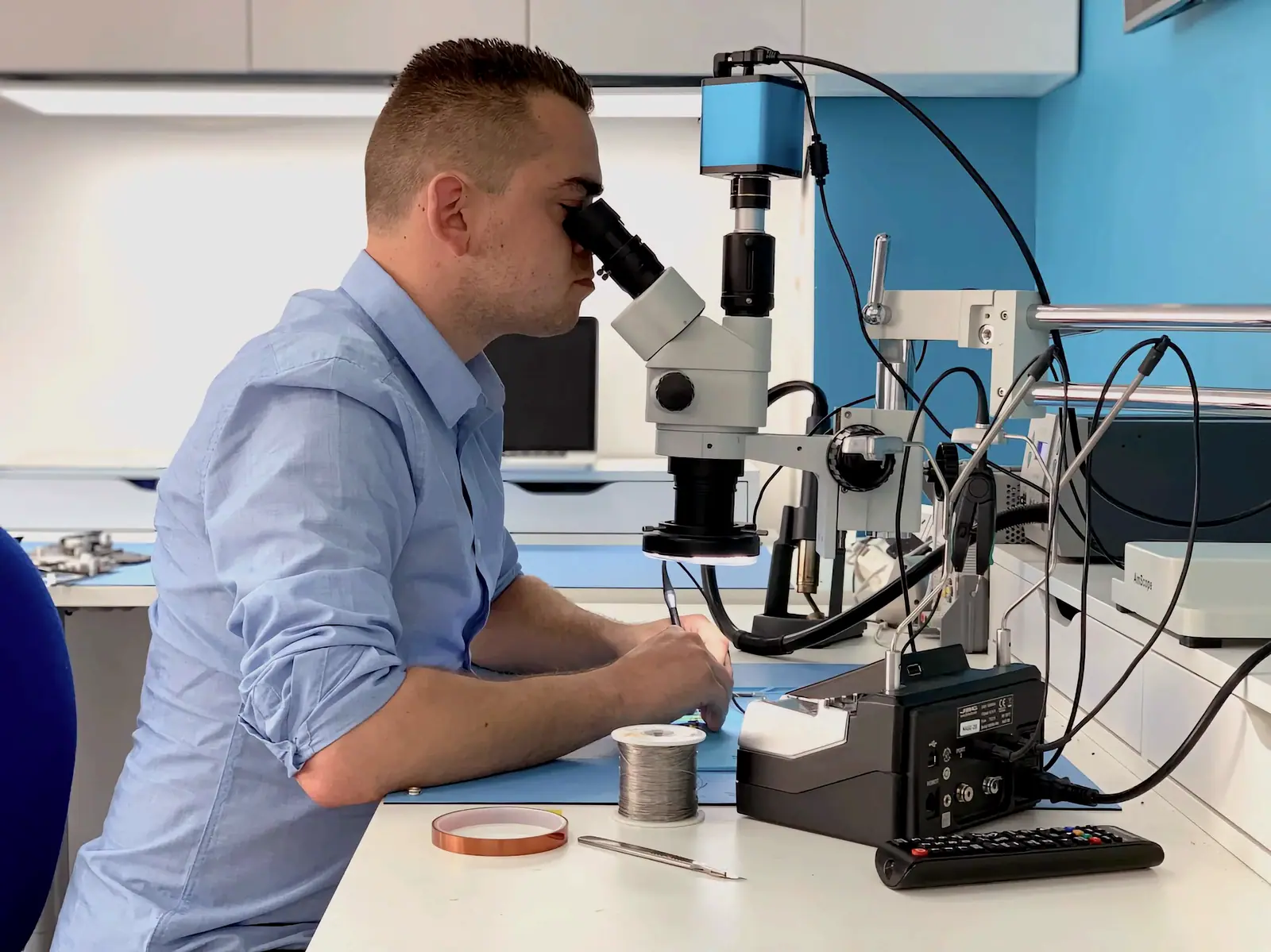
A technician working at a stereo microscope with a soldering iron and fine tools

How the note is built

Every band comes from the same place: the fault patterns we see on the bench and the published behaviour of the drives, phones and file systems involved. What you have already done to the device moves the bands down, never up. Encryption without its key and deliberate erasure stop the note outright, because no laboratory can work around them.

Bands, not percentages.

Five words describe how cases like yours usually end. The diagnosis replaces them with a finding.

Assess first, then quote.

We assess the likelihood of a complete recovery and, if that is unlikely, whether a useful partial recovery remains possible.

Your approval before any work.

After diagnosis and before recovery, we provide a price or an agreed price range. If the required procedure or time changes materially, we stop and ask for approval before exceeding it.

Scenario guide

The same outcomes the interview uses, laid out for every device and fault. Bands describe how the cases we see tend to end; the free diagnosis decides your own.

Internal hard drive A spinning drive from a desktop, laptop or server
What it is doing All of your data Any useful data What the diagnosis decides
Files deleted, bin emptied or quick-formatted; the drive works Likely Very likely How much has been written since, whether an operating system was reinstalled, and whether a repair tool has already rewritten the file system.
Asks to be formatted, shows RAW or files are unreadable Likely Very likely Drive health under a read-rate scan, and whether CHKDSK, fsck or First Aid has already rewritten the damaged metadata.
Operating system reinstalled or PC reset onto this drive Uncertain, diagnosis decides Likely Which option was chosen (keeping files, removing files or cleaning the drive), the size of the new installation and how much the computer was used afterwards.
Full (slow) format completed on Windows Vista or later Not possible without a copy of the data that was not overwritten Unlikely Whether the format was interrupted, whether the new volume covered the whole disk, and whether older partitions or free space outside it still exist.
Very slow, freezes or errors when copying; no clicking Uncertain, diagnosis decides Likely The read-error map after a first imaging pass, and whether one head is failing, in which case it becomes a cleanroom head case.
Not detected, does not spin or dead after a power surge; silent Likely Very likely Whether the calibration chip is readable, and whether the surge also damaged the pre-amplifier on the head stack.
Detected with the wrong capacity, wrong name or 0 GB Likely Likely Support for the exact model family, readability of the firmware copies and whether the heads are also weak.
Clicking, beeping or repeated spin-up Likely Likely Platter condition under the microscope and the availability of a matching donor drive.
Grinding or scraping noise, or dropped while running Unlikely Uncertain, diagnosis decides How many platter surfaces are scored and where, and whether the scored band crosses the file-system tables.
Hums or buzzes but never spins up Likely Likely Platter count and alignment during the transplant, and whether the heads also need replacing.
Flood, fire or heat damage Uncertain, diagnosis decides Likely Whether the platters stayed clean and flat, and the state of the electronics and head stack after cleaning.
External hard drive Portable or desktop drive in its own enclosure
What it is doing All of your data Any useful data What the diagnosis decides
Files deleted, bin emptied or quick-formatted; the drive works Likely Very likely How much has been written since, whether an operating system was reinstalled, and whether a repair tool has already rewritten the file system.
Asks to be formatted, shows RAW or files are unreadable Likely Very likely Drive health under a read-rate scan, and whether CHKDSK, fsck or First Aid has already rewritten the damaged metadata.
Full (slow) format completed on Windows Vista or later Not possible without a copy of the data that was not overwritten Unlikely Whether the format was interrupted, whether the new volume covered the whole disk, and whether older partitions or free space outside it still exist.
Very slow, freezes or errors when copying; no clicking Uncertain, diagnosis decides Likely The read-error map after a first imaging pass, and whether one head is failing, in which case it becomes a cleanroom head case.
Enclosure dead or not recognised; the drive itself may be fine Likely Likely Whether the key material on the drive is intact, and the condition of the drive behind the bridge.
Not detected, does not spin or dead after a power surge; silent Likely Very likely Whether the calibration chip is readable, and whether the surge also damaged the pre-amplifier on the head stack.
Clicking, beeping or repeated spin-up Likely Likely Platter condition under the microscope and the availability of a matching donor drive.
Grinding or scraping noise, or dropped while running Unlikely Uncertain, diagnosis decides How many platter surfaces are scored and where, and whether the scored band crosses the file-system tables.
Flood, fire or heat damage Uncertain, diagnosis decides Likely Whether the platters stayed clean and flat, and the state of the electronics and head stack after cleaning.
SSD or NVMe drive A solid-state drive, internal or portable
What it is doing All of your data Any useful data What the diagnosis decides
Files deleted or quick-formatted while fitted inside a computer Unlikely Uncertain, diagnosis decides Whether the discard command actually reached the drive, how long it has been powered since, and the controller family.
Files deleted while used in a USB enclosure or behind a RAID card Likely Likely Confirming that the connection really dropped the discard command, and that the drive has not since been fitted internally.
Full format, secure erase or crypto erase completed Not possible without a copy made before the erase Unlikely Whether the format ran over a connection that drops the discard command, in which case it behaves like a quick format.
Not detected, 0 MB, wrong name or stuck busy Uncertain, diagnosis decides Uncertain, diagnosis decides The exact controller and firmware combination, whether the controller die is alive, and whether the fault is on the board around it or in the silicon.
Detected but stalls, disconnects or returns read errors Uncertain, diagnosis decides Likely The raw error rate across the drive, and whether the controller keeps answering reads long enough to image it.
Dead after a power surge, short or wrong power supply Likely Very likely The extent of the surge damage and whether the controller itself was reached.
Portable SSD (Samsung T7, SanDisk Extreme and similar) not recognised Uncertain, diagnosis decides Uncertain, diagnosis decides Whether the bridge or the drive controller failed, and whether a password was ever set on the drive.
Cracked, crushed, burnt or badly bent Unlikely Unlikely Microscope inspection of each package and the board, and whether the controller can be revived.
USB flash drive A pendrive or memory stick
What it is doing All of your data Any useful data What the diagnosis decides
Files deleted or formatted; the stick works Likely Very likely What has been written since, and whether a full rather than quick format was used.
Not recognised, "insert disk" or 0 bytes Likely Likely Support for the controller's data layout, and the wear state of the memory chips.
Not recognised and it is one solid slab with no separate chips inside Uncertain, diagnosis decides Uncertain, diagnosis decides Whether the pad layout is in the database or can be traced, and whether the silicon is intact.
Plug snapped, bent or pushed in sideways Likely Very likely Whether the crack runs into the memory package or the traces beneath it.
Crushed, run over, burnt or chewed Unlikely Unlikely Microscope inspection of the memory package.
SD or microSD card From a camera, drone, dashcam or phone
What it is doing All of your data Any useful data What the diagnosis decides
Photos or videos deleted or formatted in the camera; the card works Likely Very likely Whether new photos were taken afterwards, and how fragmented long video files were.
Full-size SD card not recognised, read-only or 0 bytes Likely Likely Whether the card has separate chips or is a monolith, and support for the controller's layout.
microSD card not recognised Uncertain, diagnosis decides Uncertain, diagnosis decides Whether the pad layout is known, and whether the silicon is intact.
Bent, snapped or cracked Uncertain, diagnosis decides Likely Whether the fracture crosses the memory die.
It was set up as "internal storage" in an Android phone Not possible without the original phone that encrypted it, in working order Not possible without the original phone that encrypted it, in working order Whether the original phone can be made to work, in which case the card can be read in it.
iPhone or iPad Any model
What it is doing All of your data Any useful data What the diagnosis decides
Photos or files deleted within the last 30 days; the phone works Very likely Very likely Whether the item is still within its 30-day window, or exists in an iCloud or computer backup.
Deleted more than 30 days ago, or Recently Deleted was emptied Not possible without a backup or synced copy made before the deletion Not possible without a backup or synced copy made before the deletion Nothing on the phone itself. What decides it is whether a backup, iCloud sync, Messages in iCloud or a paired computer holds a copy.
Will not turn on, boot loops or will not charge Likely Likely Whether the main processor and its security enclave are intact, and how deep any corrosion runs.
Liquid damage Likely Likely How deep the corrosion runs, whether the phone was powered while wet, and the state of the processor.
Bent, crushed or run over Uncertain, diagnosis decides Uncertain, diagnosis decides Whether the main processor and security enclave survived the impact.
Screen or touch broken, but it turns on Very likely Very likely Whether the phone unlocks and whether a computer was previously trusted.
Android phone or tablet Samsung, Google, OnePlus, Xiaomi and others
What it is doing All of your data Any useful data What the diagnosis decides
Files deleted; the phone works Unlikely Uncertain, diagnosis decides Whether a trash folder or cloud copy still holds the files, and how much the phone was used since.
Will not turn on, boot loops or will not charge Uncertain, diagnosis decides Uncertain, diagnosis decides The model and Android version, whether the storage is hardware-encrypted, and whether the board can be revived.
Liquid damage Uncertain, diagnosis decides Uncertain, diagnosis decides How deep the corrosion runs, whether the phone was powered while wet, and the model.
Bent, crushed or run over Unlikely Uncertain, diagnosis decides Whether the processor and secure element survived the impact, and the model.
Screen or touch broken, but it turns on Very likely Very likely Whether the phone unlocks, and whether USB file transfer is enabled.
Laptop or desktop Windows, Linux or Chromebook
What it is doing All of your data Any useful data What the diagnosis decides
Dead, will not turn on or stuck on the logo Likely Likely Whether the storage can be removed, whether Windows Device encryption or BitLocker was on, and where its key is.
Shows repair screens, errors or stays on a loading screen Likely Very likely Whether automatic repair or a reset has already rewritten the drive, and the drive's health.
Slow, disconnects or makes clicking noises Uncertain, diagnosis decides Likely The read-error map after a first imaging pass, and whether the heads need replacing.
Files deleted; the computer works Uncertain, diagnosis decides Uncertain, diagnosis decides Whether the drive is a hard drive or an SSD, and how much has been written since.
Windows reinstalled or "Reset this PC" was run Uncertain, diagnosis decides Uncertain, diagnosis decides Which reset option was chosen, whether the drive is a hard drive or an SSD, and how much it was used afterwards.
Liquid spill; now dead or erratic Likely Likely Whether the storage is removable, the extent of corrosion, and the encryption state.
Apple Mac MacBook, iMac, Mac mini or Mac Studio
What it is doing All of your data Any useful data What the diagnosis decides
Does not turn on or boot (2018 or newer) Likely Likely Whether the fault is in repairable parts of the board rather than the security chip itself.
Shows only a DFU or restore prompt in Apple Configurator Likely Likely Whether the revive completes, and whether the firmware fault hides a hardware one.
Liquid spill Likely Likely How deep the corrosion runs and whether it reached the security chip or the memory.
Files deleted; the Mac works Unlikely Uncertain, diagnosis decides Whether a Time Machine backup or a local snapshot from before the deletion still exists.
2017 or older Mac with a removable drive or blade SSD Likely Very likely The drive's own condition, and whether FileVault was on and its password is known.
RAID, NAS or server Synology, QNAP, Drobo, Windows or Linux arrays
What it is doing All of your data Any useful data What the diagnosis decides
Degraded but still online with one disk down Very likely Very likely The health of the remaining members once each is imaged.
Two or more disks failed; array offline; no rebuild attempted Likely Likely Which member dropped first, and the readable fraction of each after imaging.
A rebuild or repair was forced, or new disks were inserted Uncertain, diagnosis decides Likely How far the rebuild or repair progressed, and whether older metadata still exists on the members.
"Volume crashed" or "storage pool crashed"; disks seem healthy Likely Likely Which layer failed, and whether a repair has already been clicked.
The NAS or controller died; the disks are fine Very likely Very likely That the array metadata on the disks is intact.
RAID 0 or JBOD with one disk physically failed Uncertain, diagnosis decides Uncertain, diagnosis decides The failed member's condition, assessed as a single drive.

Questions people ask before they start

Is this a diagnosis of my device?
No. It is a pre-diagnosis from your answers, built on how cases with the same device, fault and history tend to end. The free standard diagnosis in our London lab confirms the actual fault, the route and the price before any work starts.
Why do you show bands instead of a percentage?
Because a percentage would be invented. Nobody can measure your drive from a web form. The five bands describe how cases like yours usually end, and the diagnosis replaces the band with a finding about your own device.
What does "Not possible without" mean?
It marks a hard barrier that no laboratory can work around, such as full-disk encryption without the password or key, an iPhone that has been erased, or data that has been overwritten. The note names the one thing that would change the answer and where people usually find it.
Does the diagnosis cost anything?
Standard diagnosis is free, and there is no fee if we cannot recover useful data. If a device has been opened, dismantled or physically worked on elsewhere, we charge a £100 enhanced assessment fee in advance. The same fee may apply where another recovery attempt materially increases the assessment work. It becomes non-refundable once that assessment begins.
What if my budget is below the usual cost?
Tell the tool your budget after the result. If it is well below the usual range, it offers two routes: a recovery scoped to the files that matter most, paid only after you confirm the result, or an offer of goods or services in exchange for part of the fee, which Marcin reviews personally. Neither is promised in advance.
Can I still talk to you if the result says not possible?
Yes. Call 020 3903 9920 or email hello@datraction.co.uk. If something in your answers does not fit, or you have found a backup or a key since, we would rather hear it than have you give up.

Prefer to talk it through?

Send the device details and we reply within one working day with the safest next step. Standard diagnosis is free.

Describe what happened