Data Destruction Service
Datraction selects a data-destruction method from the media type, working condition, intended reuse and information risk. Suitable functioning media may be overwritten or sanitised with a supported device command and verified; failed or non-reusable media may require physical destruction. Reporting and limitations are agreed before work begins.
Request a destruction quote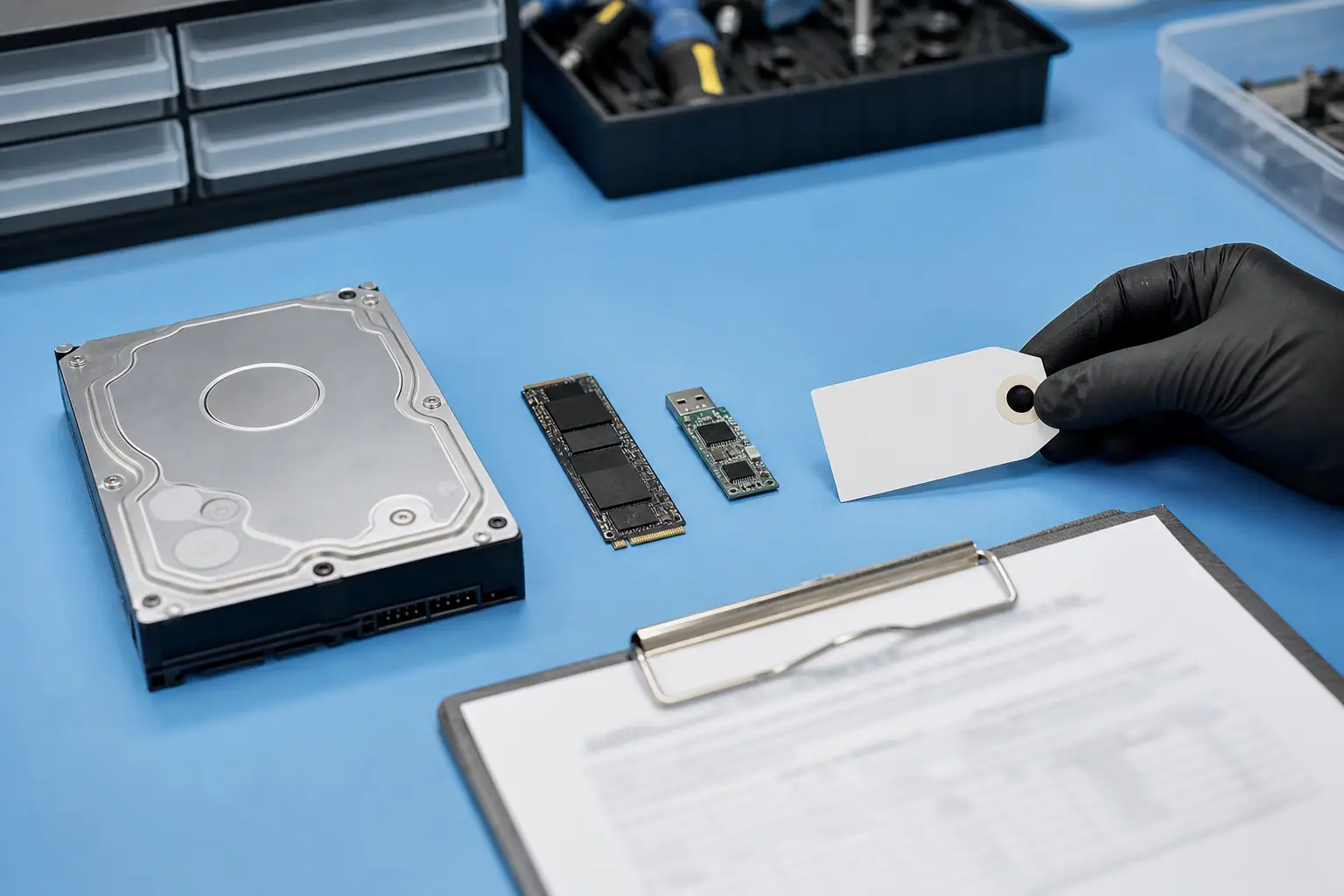
- Media-matchedmethod selected
- Written scopebefore authorisation
- Verifiedwhere supported
- Documentedrecord on request
What outcome do you need?
Reuse, disposal and evidence lead to different methods. The media type and its working state decide what can be sanitised and verified.
-
Sanitise equipment for reuse
The device should remain usable after its data is removed.
- Do this now
- List the media, quantity and intended next owner or destination.
- Likely lab route
- A non-destructive method and verification result are selected where supported.
-
Secure erase where appropriate
Working SSD or flash media supports a suitable sanitisation command.
- Do this now
- Confirm whether reuse and a verification record are required.
- Likely lab route
- The exact media and command support are checked before authorisation.
-
Physical destruction for disposal
Reuse is not required or failed media cannot accept a verifiable command.
- Do this now
- Confirm the disposal route and evidence required.
- Likely lab route
- The destructive method, handling and record are agreed in writing first.
Nothing is destroyed before written approval
Inventory and method selection remain reversible. Authorisation is the controlled boundary before treatment begins.
- Inventory
- Written scope
- Authorisation
- Treatment
- Record
Failed media may not accept or verify a software command; that limitation is stated before booking.
What we need to quote the work
A useful quote names the media, intended outcome, method limits and evidence required before anything irreversible begins.
Information we need
- Media type, approximate quantity and whether each item works.
- Whether equipment will be reused, returned or disposed of.
- The reporting, verification or chain-of-custody evidence required.
Limits stated before booking
- No one method is suitable for HDD, SSD, flash and optical media.
- A software command cannot be verified on some failed devices.
- A destruction record proves the agreed treatment, not facts outside its documented scope.
How the scope is controlled
A written scope makes the method, limits, verification and handover clear before irreversible or time-consuming work begins.
-
Deleting, formatting and sanitising are different actions
Deleting a file normally removes the file-system reference rather than proving that every underlying storage location has been treated. A quick format also creates new file-system structures; its effect on old data varies by device, operating system and whether commands such as TRIM are issued.
Neither action is a substitute for a sanitisation process selected for the actual medium and followed by an appropriate verification step. The objective is not to make the files disappear from a folder. It is to reduce the possibility of retrieval to the level agreed for the equipment and information.

Circuit board evaluation · pre-amp and ROM checks -
Reuse and disposal lead to different decisions
If equipment will be reused, the method must preserve the hardware while meeting the agreed sanitisation requirement. For suitable functioning magnetic media, that may involve writing across the user-accessible space, checking device metadata and reading the result back.
SSDs and other flash storage add a different problem. Their controllers move data between physical cells and keep spare or remapped areas outside normal file access. A normal overwrite may therefore be an incomplete answer. Supported ATA, SCSI or NVMe sanitise functions, block erase or cryptographic erase may be relevant, but only when the exact device implements the chosen method appropriately and the result can be trusted for the required risk.
If media has failed, no software command can be assumed to run or complete. Where the device will not be reused, physical destruction may be the more appropriate route.
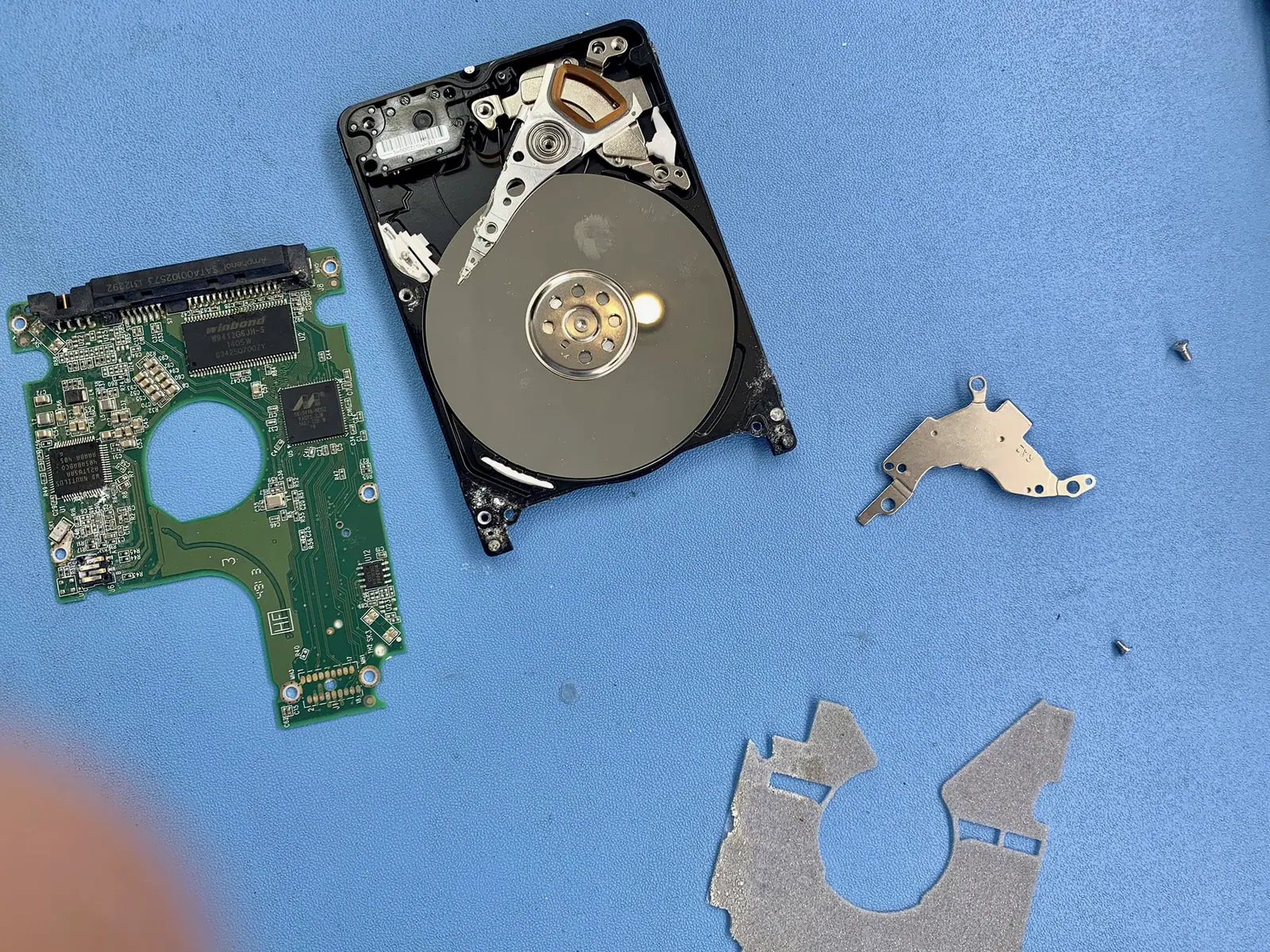
A 2.5-inch drive, fully stripped -
Verification and residual risk
The UK NCSC guidance on secure sanitisation of storage media separates preparation for reuse from disposal and places emphasis on checking the result. It also recognises that inaccessible areas, remapped sectors or a failed verification can leave residual risk.
We therefore agree the required outcome before selecting the method. If a non-destructive process cannot be completed or verified, we say so rather than turning a successful software command into a broader security claim.
-
What the destruction record proves
The optional written record identifies the media or asset reference supplied, the treatment used and the completion of the agreed work. It does not transform Datraction into an accredited sanitisation provider and does not prove compliance with an unnamed customer policy.
If your organisation requires specific asset fields, witnesses, chain of custody, disposal evidence or a named standard, include that requirement in the enquiry. We can then confirm whether it is within scope before the media leaves your control.
How the method is approved and recorded
Inventory and written authorisation come before any irreversible treatment.
-
Inventory
Identify the media and outcome
We record the media, quantity, working state and whether reuse, return or disposal is intended.
No one-size-fits-all wipe
-
Method
Select a suitable treatment
The proposed method reflects the storage technology, information risk and evidence required.
Method and limits stated in writing
-
Authorisation
Approve the written scope
Nothing irreversible begins until the work, price, handling and reporting have been accepted.
You remain in control
-
Treatment
Complete and record the work
We apply the agreed method, verify where supported and prepare the requested record.
Handover follows the agreed route
Questions about data destruction
Do you offer onsite data destruction?
Onsite work is not part of the standard London laboratory service. If equipment cannot leave your premises, provide the location, media, quantity, condition and evidence requirement before booking. We will confirm in writing whether a suitable arrangement is available instead of implying that every method can be delivered at every site.
How long does data destruction take?
Timing depends on media type, capacity, quantity, condition, method and verification. A functioning high-capacity drive can spend hours completing and checking a sanitisation process, while failed media may need a physical route. We confirm a realistic completion target after reviewing the inventory and required outcome.
Is the service certified or GDPR-certified?
There is no generic product called a GDPR destruction certificate. Datraction does not claim NCSC Assured Service, ADISA or ISO certification. We can provide a record of the agreed work on request. If your contract, regulator or internal policy requires a named accreditation or standard, state it before booking so we can confirm whether the service is suitable.
Can I securely erase a drive myself?
Sometimes. A functioning personal device may support a manufacturer-provided reset or sanitisation process, but the result must match the media and your risk. Deleting files or relying on a quick format is not evidence of sanitisation. Failed media, remapped flash and regulated information need more careful method selection.
What media can you assess for destruction?
We can assess loose HDDs, SSDs, USB and memory-card storage, optical media and complete devices that contain storage. The available treatment depends on whether the storage can be identified and accessed, whether reuse is required and how the media must be returned or disposed of after the work.
What does data destruction cost?
Pricing depends on media type, quantity, working condition, selected method, handling and the report required. A single functioning drive is different from mixed failed media or an asset list needing individual records. Send the inventory and required outcome, and we will provide a written quote before any irreversible work begins.
Tell us what needs to be sanitised
List the media, approximate quantity, working state, intended reuse or disposal and the evidence your policy requires.
Prefer to speak to someone? 020 3903 9920