RAID Data Recovery
RAID array recovery at Datraction starts from £600 for logical faults such as lost array configuration, rising to £1000–5000+ where multiple member drives have failed physically. Standard turnaround is 5–10 working days, or 24 hours on the emergency tier. Standard diagnostics are free, and no recovery fee is due if we cannot recover useful data.
Start a free diagnosis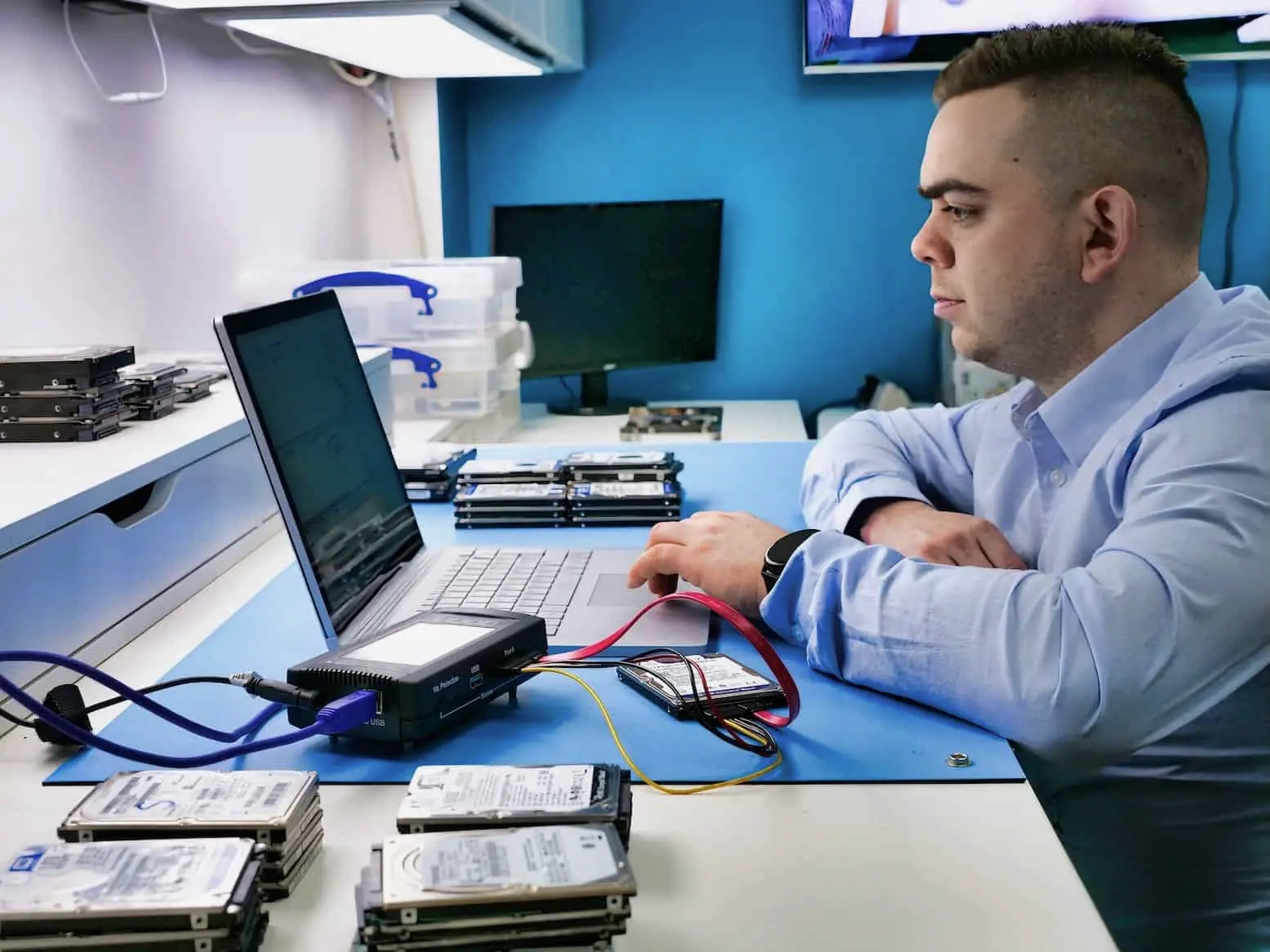
- Freestandard diagnosis
- No useful datano recovery fee
- Londonin-house laboratory
- 24 hoursEmergency target
What state is the array in now?
The safest route depends on the member drives, original order, controller history and whether a rebuild or reinitialisation has already been attempted.
-
One or more failed member drives
The system is degraded, offline or repeatedly drops a disk.
- Do this now
- Power down and label each original bay without changing order.
- Likely lab route
- Every member is assessed and imaged independently before reconstruction.
-
Lost configuration or controller
The disks are present but the volume or array definition is missing.
- Do this now
- Do not create a new array or accept an initialise prompt.
- Likely lab route
- Stripe order, block size, parity and offsets are inferred from the evidence.
-
Rebuild failed or wrong disks used
A rebuild completed incorrectly, stalled or made files inaccessible.
- Do this now
- Stop all writes and record exactly what was changed.
- Likely lab route
- Drive generations and write history are compared before a virtual reconstruction is attempted.
Reconstruct from images, not assumptions
Each member has its own condition. Only after acquisition do drive order, stripe size, parity and file-system structure become one virtual result.
- Member drives
- Independent images
- Array parameters
- Virtual RAID
- Priority data
A rebuild writes to the only evidence you have; virtual reconstruction does not.
What determines a useful RAID result
Diagnosis is useful when it narrows the route and the limits. We state both before you approve recovery work.
What may be possible
- Virtual reconstruction from the best available image of every member.
- Recovery after controller loss where array parameters can be inferred.
- Targeted priority data where one or more members contain unreadable regions.
What can stop recovery
- Too many missing or unreadable members can exceed the redundancy available.
- A wrong rebuild can overwrite parity and data across the array.
- Encrypted volumes still require the legitimate keys and configuration.
How the array is reconstructed
The work moves from individual member evidence to one virtual result. The original array is not used as a test bed.
-
Why we stop the rebuild before we start recovery
Once a NAS or RAID controller flags a degraded array, continuing to run it puts every remaining drive under extra load at exactly the moment they are least able to handle it. Each member is assessed separately, and readable regions are imaged with strategies suited to its condition so reconstruction does not depend on repeatedly stressing the original array.
PC-3000 · surface and firmware diagnostics -
Rebuilding the array from images, not the originals
Using the available drive images, the original stripe order, block size and parity scheme are identified and the array is reassembled virtually rather than rebuilt in place. Missing or unreadable regions can still leave damaged files, so the virtual result is checked against the customer's priority folders before it is described as a useful recovery.
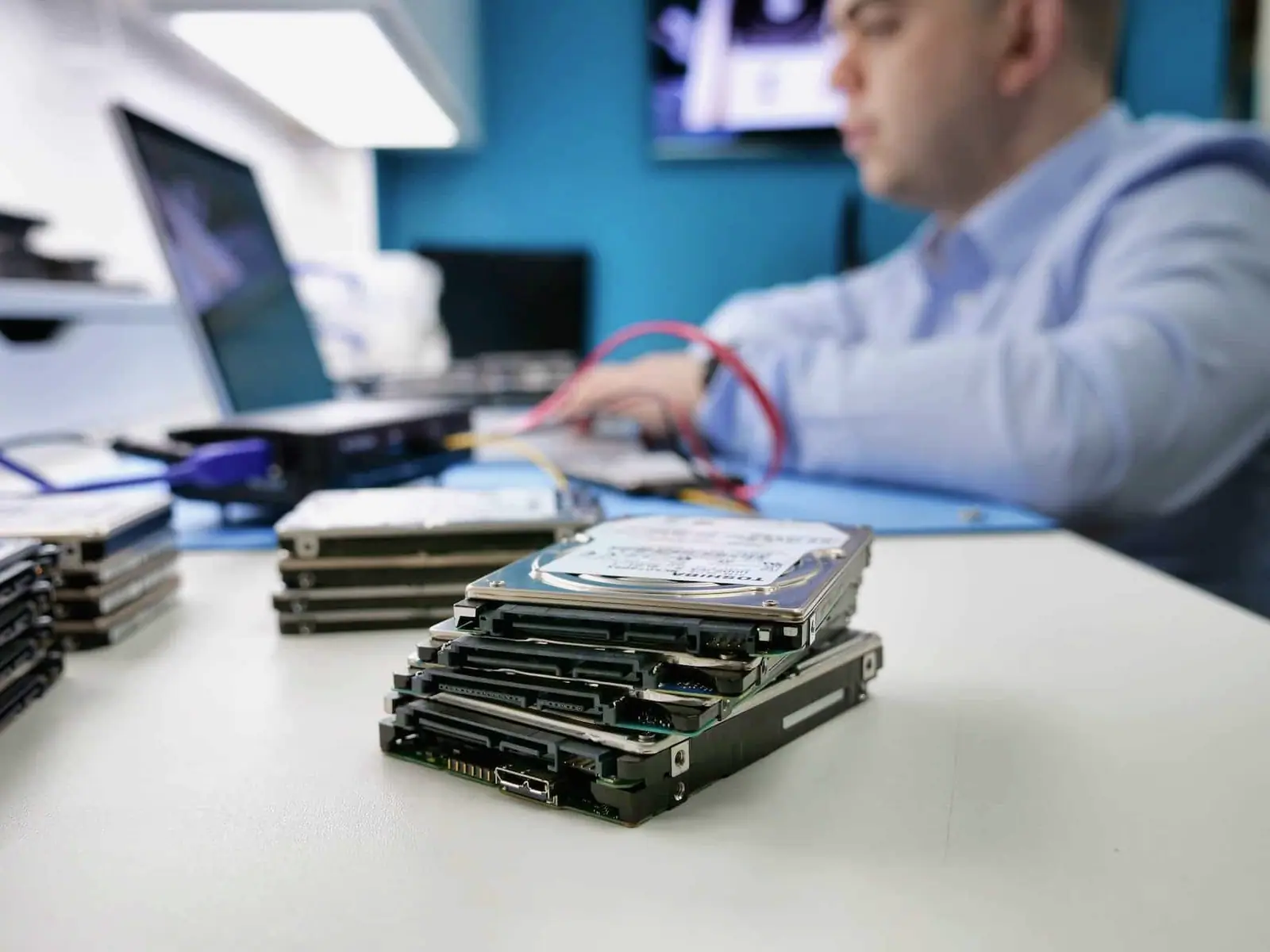
Donor library · Seagate, Western Digital, Toshiba, HGST, Samsung, Hitachi
What happens to your raid
From first description to returned files, each stage has a clear decision and an agreed commercial limit.
View the complete recovery process-
Your enquiry
Tell us what happened
Describe the device, the failure and the files you need. We give you an initial price range before it is sent or dropped off.
Price range before arrival
-
Lab diagnosis
We inspect it — free
An engineer identifies the fault, assesses complete and useful partial recovery, then prepares a written price or agreed range.
Fault, prospects and commercial limit confirmed
-
Your decision
You approve the recovery
We explain the proposed work and timing. Recovery starts only after you have accepted the quote.
No work starts without consent
-
Secure return
Your files come back
Recovered data is copied to suitable return media and sent back with your original device.
No recovered data, no recovery fee
Recovery priority
How fast do you need your data back?
The engineering process and level of care stay the same. A faster service moves your case forward in the lab queue.
Turnaround starts when the device reaches our laboratory.
-
Standard
5–10 working days
Targets recovery and return within 5–10 working days of the device reaching our lab, subject to diagnosis, parts and media condition.
Recovery price Included -
Express
3–5 working days
Prioritises the case and targets 3–5 working days from arrival, subject to diagnosis, parts, media condition and data volume.
Priority surcharge +40% -
Emergency
24 hours
Gives the case highest queue priority and targets 24 hours from arrival when the fault, parts, media condition and data volume allow it.
Priority surcharge +70%
Questions about raid
Do you sell replacement disks?
No. We can tell you what size and type of disk you may need to replace a faulty HDD where relevant, but you will need to source the hardware yourself.
Does it matter how old the RAID is?
Age alone does not decide recoverability. Older arrays may use proprietary controllers, interfaces or file systems, while their member drives may have more wear. Preserve the drive order and configuration, then send the model and photographs so we can identify the safest intake route.
How much does it cost to recover my RAID data?
Standard diagnostics are free, so you find out what is wrong before approving recovery. Logical reconstruction starts at £600; multi-drive or physically damaged arrays usually run from £1000 to £5000+, with larger systems quoted individually. Express service adds 40% and Emergency adds 70%. If we cannot recover useful data, there is no recovery fee.
Do I need to send you all the drives in the RAID?
Keep every member drive, including one you believe has failed, and label its original bay. Do not initialise or rebuild the array. Contact us before dismantling the system because some cases also need controller, enclosure or configuration details, and we will confirm exactly what to send.
Can I send you my server?
Contact us before sending or dismantling a server. Some cases only need every member drive and a labelled slot map; others depend on a proprietary enclosure, controller, cache or configuration. Send photographs and model details first, and we will confirm whether the full chassis is useful.
Tell us what happened
Describe the device, the symptom, what has already been tried and which files matter most. We will tell you the safest next step.
Prefer to speak to someone? 020 3903 9920
Already asked to send the device? Follow the packing and delivery checklist.