
About Datraction: a lab, not a middleman
Datraction diagnoses and completes most recoveries in its own London lab, with a dedicated cleanroom environment for mechanical hard-drive work. Standard diagnosis costs nothing, and if our equipment is not sufficient for an unusual case, we discuss a specialist partner laboratory with you before anything leaves our hands.
The case stays with one engineer
Datraction began in 2019 with one purpose: to give failed storage the careful, evidence-led diagnosis that ordinary repair workflows cannot provide. The service has grown around the same London bench, controlled handling and direct conversation with the engineer responsible for the case.
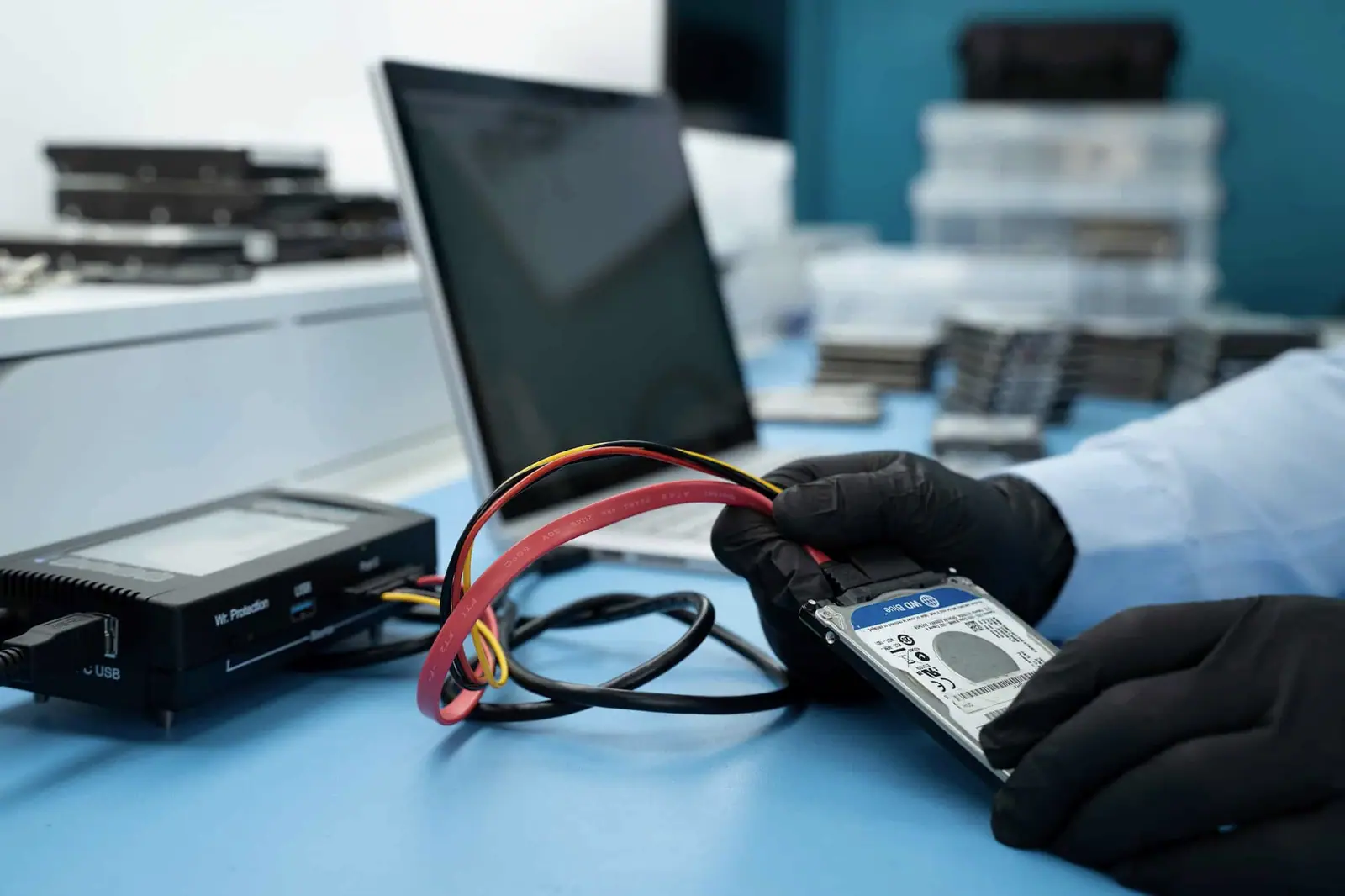
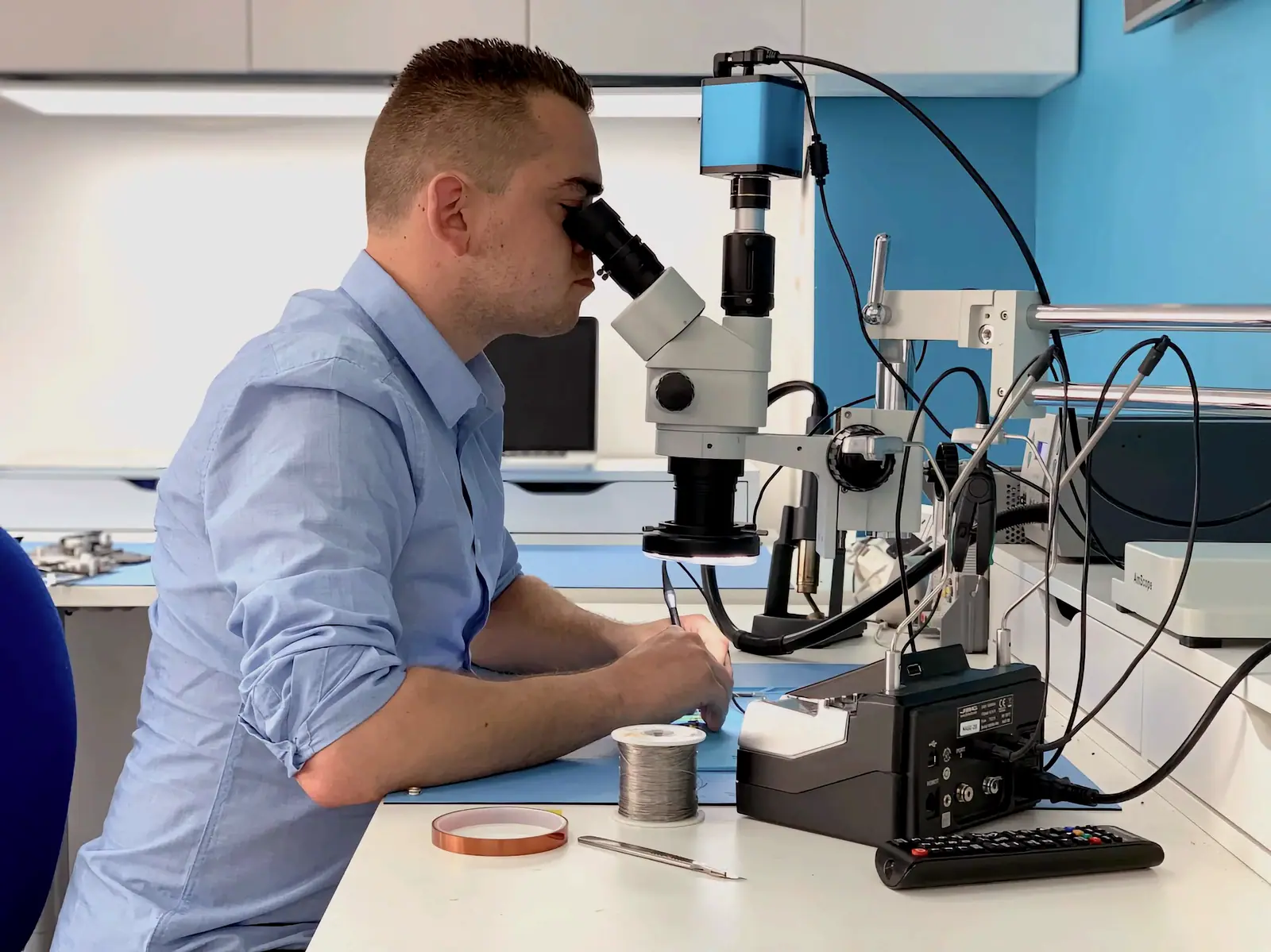
Imaging, head swaps, firmware repair and file-system rebuilding normally happen in the same building, under the same conditions. A drive is imaged before anything is written to it wherever imaging is possible, so repeated recovery work takes place against controlled copies rather than the increasingly fragile original.
We do not publish a blanket recovery percentage: the chance of success depends on the device, the damage, encryption, previous attempts and whether data has been overwritten. Diagnosis gives you an assessment for your own case, and our case studies show both successful and unsuccessful work. Where useful data cannot be recovered, there is no recovery fee.
The same bench also serves the trade: IT companies and repair shops send their clients' failed drives to us under our partner programme, white-label or by referral.
- PC-3000
- DeepSpar
- microscope inspection
- BGA rework
- precision micro-soldering
What happens when your device arrives
Every device we take in goes through the same intake, whether it was dropped off in person or collected by courier:
- 01 the device is photographed on arrival
- 02 a job ticket is raised and the device registered against it
- 03 the customer is notified that it has been received
An encrypted drive can only be recovered if you supply the key or password: full-disk encryption is not something the lab can bypass.
Who actually works on your drive
The engineer who diagnoses your device is the engineer who recovers it. There is no case manager in the middle, no queue between departments, and no handover where the reasoning gets lost. When you call, you speak to someone who has had your drive in their hands.
That is a deliberate choice rather than a limitation. Recovery is a craft, and the useful knowledge in it — what a particular family of drives does before it fails, which donor actually matches, when to stop — sits with the person doing the work, not in a process document. Keeping the bench small is how that knowledge stays in the room.
It also means we say no more often than a larger lab would. If a case is not worth attempting, we tell you rather than take the job to fill a queue.
What we will not do
Most of what separates a lab from a shopfront is what it refuses. These are ours.
-
Quote before we have seen it
A price given over the phone is a guess about a device nobody has opened. After diagnosis you get a written price or an agreed range, and we ask again before exceeding that commercial limit.
-
Hide an enhanced assessment charge
Standard diagnosis is free. If previous physical work requires an enhanced assessment, we explain the £100 fee before it begins; otherwise walking away costs nothing.
-
Take a case we do not rate
Some devices are past recovering, and a few are made worse by trying. We say so instead of billing for the attempt.
-
Promise every file back
Badly damaged media often gives up most of its data rather than all of it. We show you what we have before you pay, and you decide whether it is worth having.
Donor parts, matched rather than guessed
Head assemblies and platters are specific to a make, model and firmware revision, so a mechanical recovery is only as good as the donor behind it. We keep a donor library covering major manufacturers including Toshiba, Samsung, Western Digital, HGST, Hitachi, Seagate.
Matching takes longer than substituting something close. It is also the difference between a drive that reads and a drive that has been opened twice.
Your data while we have it
We do not inspect file contents beyond what recovery, your stated priorities and result verification require. Your devices and recovery media are stored in a safe while they are not being worked on, and the office camera system records 24 hours a day.
A working copy may be retained for up to 48 hours after the customer receives or collects the recovered data. It can be deleted immediately on request or after the customer confirms by email that it is no longer needed.
For the personal data on your device we act on your instructions and nothing else. The roles, the retention and how to complain are set out in the privacy policy.
Lab and contact
- Address
- 136 Kingston Road, SW19 1LY, London, United Kingdom
- Phone
- 020 3903 9920
- hello@datraction.co.uk
- Opening hours
-
Monday to Friday: 9am – 6pm
Saturday: 9am – 4pm
Sunday and bank holidays: Closed
Get a free diagnosis quote
Tell us what happened. We will come back with clear next steps and pricing before any recovery work begins.