What had happened
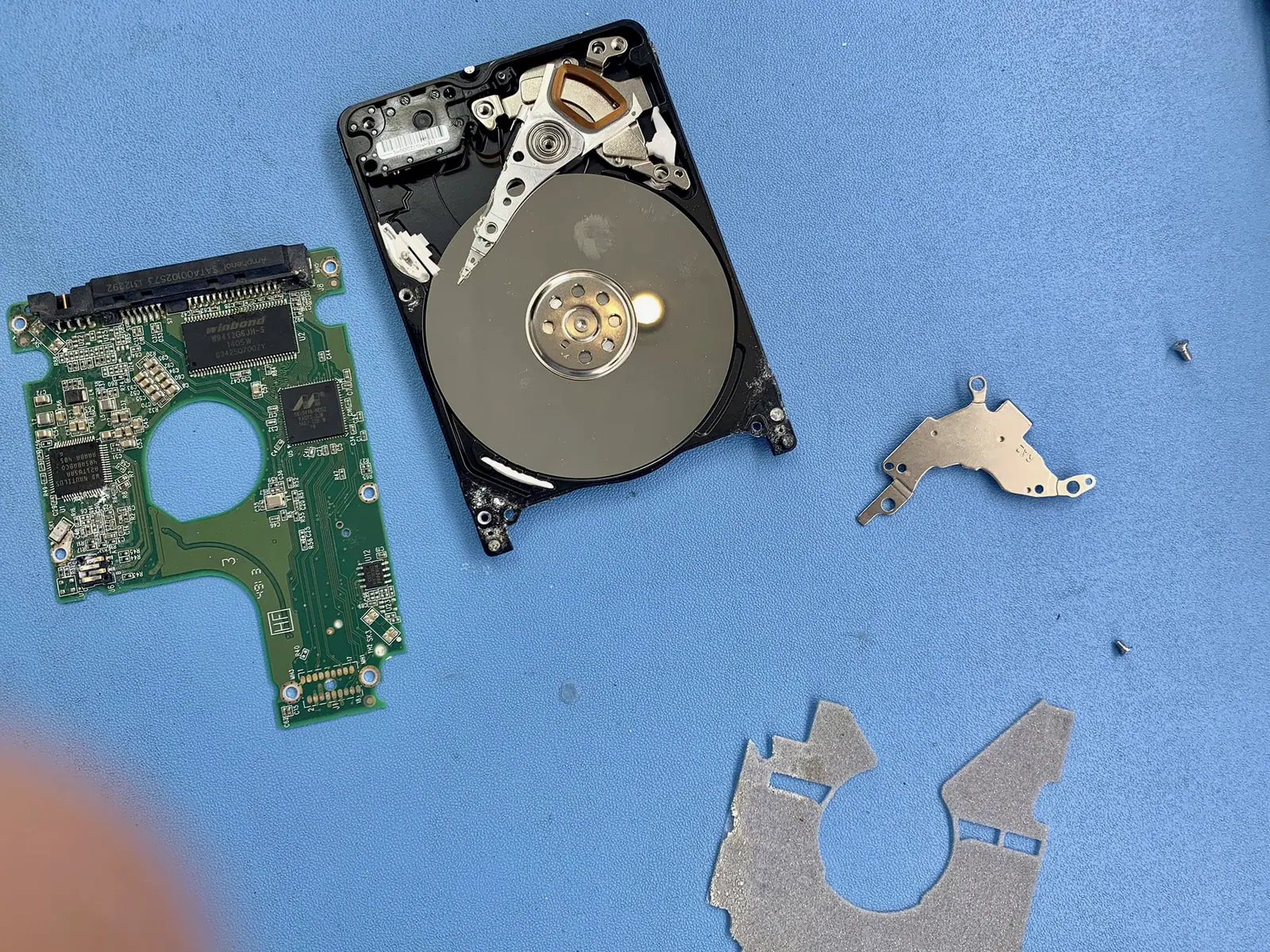
The WD My Passport had been dropped. The job record identified damage to both the heads and the electronics. That already placed the case beyond software recovery, but the decisive problem was on the recording surfaces themselves.
Why donor parts were not enough
Donor heads can sometimes create a temporary reading window when the original head assembly has failed. They cannot restore magnetic material that has been physically damaged. In this case, defects on the platters caused replacement heads to fail during the attempts.
More than one donor was tried. Each attempt added evidence about the condition of the source, but it also confirmed that simply supplying another matching component would not solve the underlying surface damage.
The decision to stop
The work extended over approximately four months and accumulated about £620 in assessment and donor costs. That was not a successful-recovery charge; it reflected the historical arrangement for the investigation and parts used on this unusually difficult case.
Continuing to consume donors without a credible path to a useful image would not have changed the physical condition of the platters. The responsible outcome was to stop and report the limit.
The result
No useful data was recovered. Publishing that result matters because selected success stories alone give a false impression of mechanical recovery. Some drives have crossed the boundary where available procedures cannot produce safe, readable evidence.
What this case teaches
After a drop, do not power the drive on to “see if it still works”. New clicking, grinding or repeated spin-up attempts can accompany head and surface damage. Stop using the device, keep it level and obtain a diagnosis before authorising repeated attempts or opening it outside an appropriate environment.